





 Payment Plans
Charged with a Drug Offense in California?
Diversion Programs Can Resolve Your Case Without a Conviction — Successful Completion Means the Charge Is Dismissed and Your Record Stays Clean.
California criminal defense attorney David Chesley has successfully guided clients through drug diversion programs — including PC § 1000 Deferred Entry of Judgment (DEJ), Proposition 36 treatment, drug court, PC § 1001.95 misdemeanor diversion, military diversion (PC § 1001.80), and mental health diversion (PC § 1001.36) — in criminal courts across every county in California. Diversion is often the best outcome available: a true dismissal with no conviction recorded. The window to pursue it is time-sensitive. Build your case now.
IMMEDIATE STEPS IF CHARGED WITH A DRUG OFFENSE:
- Do not plead guilty or accept any plea offer before exploring diversion eligibility — a guilty plea can foreclose options that lead to outright dismissal; once entered, it cannot be undone
- Do not assume you are ineligible — eligibility depends on the charge, your record, and the specific program; many defendants qualify under one pathway even if they don't qualify under another
- Preserve documentation of any treatment, counseling, or rehabilitation you have already started — courts view proactive steps favorably and early treatment engagement strengthens the diversion application
- Contact experienced counsel immediately — diversion applications have strict timing requirements and the window to pursue them before a conviction is recorded is limited
Call now for a free, confidential consultation — available 24/7. 📞 (800) 755-5174
THE STAKES ARE REAL — DIVERSION CHANGES EVERYTHING
A drug conviction creates permanent barriers to employment, housing, professional licenses, financial aid, and immigration status. Even a misdemeanor drug conviction appears on background checks and signals issues that follow you for life. Diversion is different. Successful completion typically results in the charge being dismissed with no conviction recorded — a categorically better outcome than any plea deal.
Without diversion, common consequences by charge include:
- Simple possession of a controlled substance (HS § 11350): Felony — up to 3 years in state prison; or misdemeanor — up to 1 year in county jail; permanent drug conviction record
- Possession of methamphetamine (HS § 11377): Misdemeanor — up to 1 year in county jail; felony with prior convictions; permanent record
- Possession for sale (HS § 11351, HS § 11378): Felony — 2 to 4 years in state prison; significantly harder to divert but specific programs available
- Transportation / sale of controlled substances (HS § 11352, HS § 11379): Felony — 3 to 9 years in state prison
- Under the influence (HS § 11550): Misdemeanor — up to 1 year in county jail; crime of moral turpitude immigration consequences for non-U.S. citizens
- Permanent criminal record — affecting employment, housing, professional licensing, financial aid, and public housing eligibility
- Immigration consequences — drug convictions are among the most serious under federal immigration law; deportation, removal, and permanent bars to naturalization
Diversion eliminates the conviction in most cases — and with it, every consequence listed above.
California Drug Diversion Programs — Key Pathways:
| Program | Statute | Best For | Outcome on Successful Completion |
|---|---|---|---|
| Deferred Entry of Judgment (DEJ) | PC § 1000 | Simple possession, under the influence (first-time eligible defendants) | Guilty plea withdrawn; charges dismissed; arrest often sealed |
| Proposition 36 | PC § 1210.1 | Nonviolent drug possession (including some repeat cases) | Treatment instead of incarceration; potential dismissal |
| Drug Court | Local / PC § 1000.5 | More serious or repeat cases needing intensive supervision | Charges often dismissed after program completion |
| Misdemeanor Judicial Diversion | PC § 1001.95 | Most misdemeanor drug offenses | Charges dismissed; arrest sealed (court can grant over prosecutor objection) |
| Military Diversion | PC § 1001.80 | Veterans / active military with service-related issues | Charges dismissed; arrest deemed never to have occurred |
| Mental Health Diversion | PC § 1001.36 | Cases where mental health disorder significantly contributed | Charges dismissed; arrest sealed |
Call (800) 755-5174 for a free 24/7 consultation to determine which pathway fits your case.
CALIFORNIA DRUG DIVERSION PROGRAMS — HOW EACH ONE WORKS
PC § 1000 — Deferred Entry of Judgment (DEJ)
PC § 1000 DEJ is California's primary pre-conviction diversion pathway for defendants charged with simple drug possession and related offenses. The defendant enters a guilty plea — but entry of judgment is deferred while the defendant completes an approved drug education or treatment program, typically 18 to 24 months. Upon successful completion, the guilty plea is withdrawn, the charges are dismissed, and no conviction is ever recorded. The arrest record can be sealed in most circumstances. Under PC § 1000.4, the defendant may thereafter deny being arrested for the offense in most contexts — producing a practical benefit that extends to every background check, every employment application, and every licensing proceeding for the rest of the defendant's life.
DEJ is available for defendants charged with simple possession of a controlled substance (HS § 11350), possession of marijuana (HS § 11357 in felony circumstances), being under the influence (HS § 11550), and related offenses — who have not previously been convicted of certain disqualifying drug offenses. It is the most commonly used diversion pathway for first-time drug possession defendants and produces the most complete pre-conviction record clearance available.
Proposition 36 — Substance Abuse and Crime Prevention Act
Proposition 36, enacted by California voters, provides drug treatment as an alternative to incarceration for defendants convicted of nonviolent drug possession offenses. Unlike PC § 1000 DEJ — which operates before conviction — Proposition 36 is available after conviction and provides treatment in lieu of jail or prison. Upon successful completion of the community-based treatment program, the conviction may be dismissed under PC § 1210.1(e) and the record sealed. Proposition 36 is available for nonviolent possession offenses including HS § 11350, HS § 11357, HS § 11377, and HS § 11550 — and unlike DEJ, it is available in some circumstances to defendants with prior drug convictions who do not qualify for PC § 1000. For defendants who have already been convicted or who do not qualify for pre-conviction diversion, Proposition 36 is frequently the most important alternative to incarceration available.
Drug Court — PC § 1000.5 and Local Programs
Drug court is a specialized court program providing intensive supervision, treatment, and accountability for defendants with substance use disorders. Programs exist in most California counties and vary significantly in structure and eligibility by jurisdiction. Drug court involves graduated treatment phases with regular court appearances, drug testing, compliance monitoring, and direct judicial supervision. Successful completion results in dismissal of charges or significant sentence reduction depending on the program structure. Drug court is particularly valuable for defendants charged with offenses that do not qualify for DEJ or Proposition 36 — including in some programs possession for sale — making it the only available diversion pathway for defendants facing more serious drug charges. The intensive structure also addresses severe substance use disorders more effectively than shorter programs.
PC § 1001.95 — Misdemeanor Judicial Diversion
California's misdemeanor diversion statute, enacted in 2021, gives courts the authority to divert misdemeanor charges — including most drug misdemeanors — before conviction and before a plea is entered. Critically, PC § 1001.95 allows the court to grant diversion over the prosecution's objection — making it one of the most powerful diversion tools available when the prosecution is unwilling to agree to other programs. The defendant is placed on diversion for up to 24 months. Upon successful completion, the charges are dismissed and the arrest record is sealed. In most circumstances the defendant may truthfully state they were not convicted of the offense. For misdemeanor drug defendants facing a prosecution that is opposing diversion, PC § 1001.95 provides the court with independent authority to grant the relief the defendant deserves — regardless of what the prosecutor wants.
PC § 1001.80 — Military Diversion
California provides a specific diversion pathway for current and former members of the United States military charged with misdemeanor offenses — including drug misdemeanors — when the offense is related to a qualifying condition resulting from military service: mental health conditions, substance use disorders, sexual trauma, PTSD, traumatic brain injury, or other service-connected issues. Upon successful completion of the treatment program, the charges are dismissed and the arrest is deemed never to have occurred. Military diversion is one of the most powerful and most underutilized diversion pathways in California — and many veterans facing drug charges are unaware that their military service creates a specific additional diversion pathway not available to civilian defendants. If you are a current or former member of the military, military diversion must be assessed from the first consultation in every case.
PC § 1001.36 — Mental Health Diversion
Mental health diversion provides a pathway for defendants with qualifying mental health disorders — as defined in the DSM-5 — whose condition played a significant role in the commission of the charged offense. The defendant must have a qualifying diagnosis, the condition must have contributed significantly to the offense, and the defendant must be amenable to mental health treatment. Upon successful completion of the treatment program, the charges are dismissed and the arrest record is sealed. Mental health diversion is particularly valuable for defendants whose drug use is connected to an underlying condition — anxiety, depression, PTSD, bipolar disorder, or other qualifying diagnoses — because it addresses the root cause of the conduct and produces the dismissal that other programs may not achieve for defendants whose situation is more complex than simple substance use.
HOW DAVID CHESLEY HANDLES DRUG DIVERSION CASES
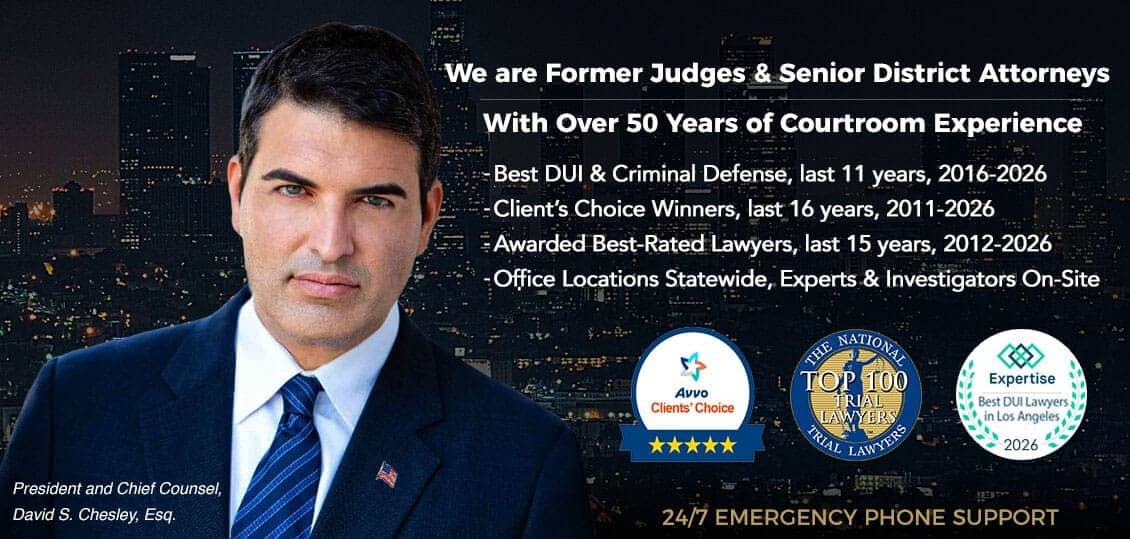
David Chesley personally evaluates every available diversion option for your specific charge and background — from the first consultation through successful completion and final dismissal. Southern, Central, and Northern California, every county, every major jurisdiction — available 24 hours a day, 7 days a week. No hand-offs. No junior associates.
The process in every case:
Full eligibility assessment across all programs — every available pathway analyzed for the specific charge and the specific defendant's history; many defendants who do not qualify for one program qualify for another.
Avoiding premature pleas — ensuring no guilty plea is entered before every diversion option has been assessed; a plea that forecloses diversion cannot be undone.
Building the strongest possible application — treatment documentation, letters of support, evidence of rehabilitation, and the specific presentation that most effectively supports admission to the program when the court and prosecution have discretion.
Ensuring full program compliance — the most important work after admission is ensuring every requirement is met; missed appointments, failed tests, and compliance failures produce termination and the conviction diversion was meant to avoid.
Securing the dismissal and record sealing upon completion — upon successful completion, the petition for dismissal and application for arrest record sealing are filed immediately and pursued to final order.
Free, confidential case review — available 24/7, no obligation. 📞 (800) 755-5174 | 📧 calllog@chesleylawyers.com
YOU HAVE RIGHTS. USE THEM.
Diversion produces the best outcome available in most drug cases — a true dismissal with no conviction recorded. Common resolutions:
- PC § 1000 DEJ completed — charges dismissed; arrest sealed; no conviction ever recorded; employment and licensing barriers eliminated
- Proposition 36 completed — conviction dismissed and sealed; treatment completed; immigration consequences avoided
- Drug court completed — charges dismissed after intensive supervised treatment; substance use disorder addressed
- PC § 1001.95 misdemeanor diversion granted over prosecution objection — court granted diversion over objection; 18-month program completed; charges dismissed; arrest sealed
- Military diversion completed — veteran defendant; service-connected condition documented; charges dismissed; arrest deemed never to have occurred
- Mental health diversion completed — underlying mental health condition addressed; charges dismissed; arrest sealed
- Drug court as only available pathway — defendant charged with possession for sale; not eligible for DEJ or Proposition 36; drug court accepted; charges resolved without state prison
- Immigration-safe diversion resolution — non-U.S. citizen charged with drug possession; PC § 1000 DEJ completed; no conviction recorded; deportation consequences avoided
WHY CLIENTS CHOOSE DAVID CHESLEY
Direct, personal attention — statewide, 24/7
David Chesley personally handles drug diversion cases in criminal courts across all of California — Los Angeles, San Diego, Orange County, San Francisco, Sacramento, Fresno, San Jose, Riverside, San Bernardino, Ventura, and every other jurisdiction statewide. Available 24 hours a day, 7 days a week — because the diversion window is time-sensitive and the opportunity to avoid a conviction is the most important outcome in any drug case.
Straight talk, always
Not every drug charge qualifies for every diversion program — and not every diversion application is approved. The specific charge, the program's eligibility requirements, the defendant's prior record, and the specific court's approach all determine what is available. You deserve honest counsel about every option and what the realistic outcomes are. No false promises. No sugarcoating.
Every diversion pathway identified from day one
The difference between one attorney and another in a drug diversion case is frequently whether all six pathways were assessed — or only one. Many defendants who did not qualify for DEJ qualified for PC § 1001.95. Many who did not qualify for either qualified for drug court. Many veterans who qualified for military diversion were never told it existed. Every available pathway is identified and pursued from the first day of representation.
California-wide expertise across every diversion program
Deep knowledge of PC § 1000 DEJ, Proposition 36, drug court programs across every major California county, PC § 1001.95 misdemeanor diversion, PC § 1001.80 military diversion, PC § 1001.36 mental health diversion, and the specific eligibility requirements and application procedures for each — across every region of California, Southern, Northern, and Central.
Flexible payment plans
The Law Offices of David Chesley offer flexible payment plans because cost should never be the reason someone facing a drug charge goes without experienced representation to pursue the diversion that keeps a conviction off their record.
Representative Results:
- PC § 1000 DEJ completed — simple possession charge; 18-month drug education program completed; charge dismissed; arrest sealed; no conviction recorded; professional license application unaffected
- Proposition 36 completed — nonviolent possession conviction; community-based treatment program completed; conviction dismissed and sealed; immigration consequences avoided
- Drug court completed — defendant with substance use disorder charged with possession; intensive supervised treatment completed; charges dismissed; underlying addiction addressed through structured program
- PC § 1001.95 misdemeanor diversion granted over prosecution objection — court granted diversion over prosecution's objection under PC § 1001.95; 18-month program completed; charges dismissed; arrest sealed
- Military diversion completed — veteran defendant charged with drug misdemeanor; PC § 1001.80 pathway identified; treatment program addressing service-connected PTSD completed; charges dismissed; arrest deemed never to have occurred
- Mental health diversion granted — defendant with anxiety disorder whose drug use was connected to underlying condition; PC § 1001.36 diversion granted; treatment program completed; charges dismissed; arrest sealed
- Drug court as only available pathway — defendant charged with possession for sale; not eligible for DEJ or Proposition 36; drug court accepted; program completed; charges resolved without state prison
- Immigration-safe diversion resolution — non-U.S. citizen charged with drug possession; PC § 1000 DEJ pursued and completed; no conviction recorded; deportation and drug conviction immigration consequences avoided
Client Feedback:
"I was terrified about a drug possession charge ruining my career and my professional license. David identified the DEJ program, guided me through the entire process, and the charge was dismissed with no conviction. My license application was approved. I had no idea this outcome was possible." — Anonymous former client
"I am a veteran and had no idea there was a specific diversion program for military service members. David identified the military diversion pathway, documented the connection to my service and my PTSD, and the charges were dismissed. The arrest is deemed never to have occurred." — Anonymous former client
"The prosecution was objecting to diversion but David argued for it under PC § 1001.95 and the court granted it over their objection. I completed the program, the charges were dismissed, and my record is clean." — Anonymous former client
"Non-citizen facing a drug charge that could have meant deportation. David pursued DEJ, got it completed, and there is no conviction on my record. My immigration status is protected." — Anonymous former client
FREQUENTLY ASKED QUESTIONS
What is the difference between diversion and a plea deal?
Diversion leads to dismissal with no conviction upon successful completion — a categorically different outcome from any plea deal. A plea deal results in a conviction and a permanent criminal record that appears on every background check and affects employment, housing, licensing, and immigration for the rest of the defendant's life. Diversion, upon successful completion, produces a dismissal. The defendant is not convicted. In most circumstances the defendant can truthfully answer "No" when asked about convictions on employment applications. For eligible defendants, diversion is not just a better plea deal — it is a fundamentally different outcome that eliminates the most serious and most lasting consequences of a drug charge entirely.
What drug charges qualify for diversion in California?
Eligibility depends on the specific program and the specific charge. PC § 1000 DEJ is available for simple possession offenses including HS § 11350, HS § 11357, and HS § 11550. Proposition 36 is available for nonviolent possession offenses. PC § 1001.95 misdemeanor diversion covers most misdemeanor drug offenses. Drug court accepts a broader range including in some programs possession for sale. Military diversion and mental health diversion are available based on the defendant's status and circumstances. Defendants charged with more serious offenses should not assume no pathway exists before a full eligibility assessment across all six programs is completed.
Can I still get diversion with a prior record?
It depends on the program. PC § 1000 has stricter prior record limits — certain prior drug convictions disqualify a defendant from DEJ. But PC § 1001.95 misdemeanor diversion, drug court, military diversion, and mental health diversion do not carry the same prior record restrictions. A defendant who does not qualify for DEJ based on their record may qualify for multiple other programs — and the full eligibility analysis across every available pathway is conducted from the first consultation regardless of prior record.
Does diversion help with immigration?
Significantly — and for non-U.S. citizens it is frequently the most important outcome in the case. Drug convictions are among the most serious immigration consequences under federal law — triggering mandatory deportation, removal, and permanent bars to naturalization. A diversion program that produces a dismissal with no conviction recorded eliminates the drug conviction that would otherwise trigger those consequences in most circumstances. For non-U.S. citizens facing drug charges, the difference between a conviction and a completed diversion is frequently the difference between remaining in the United States and deportation. Immigration consequences must be analyzed from the very first consultation in every case involving a non-U.S. citizen defendant.
What if I fail the program?
Failure usually means the case returns to regular proceedings and a conviction may be entered — the original charge is reinstated and the case proceeds without the benefit of diversion. In PC § 1000 DEJ, the deferred guilty plea is entered as a conviction. In PC § 1001.95, the charge proceeds normally. This is why ensuring full compliance with every program requirement from the first day of admission is as important as getting into the program — and compliance support is part of the strategy from day one through completion.
Does diversion help with professional licensing?
In most cases, significantly. A drug charge that is diverted and dismissed with no conviction recorded has substantially less impact on professional licensing than a drug conviction. Many California licensing boards treat a diverted and dismissed charge far more favorably than a conviction — and in some circumstances the diversion and dismissal eliminates the mandatory reporting obligation entirely. The specific impact on your license type is analyzed in the initial consultation.
How long do programs last?
Typically 12 to 24 months depending on the program and individual needs. PC § 1000 DEJ programs run 18 to 24 months. PC § 1001.95 diversion runs up to 24 months. Drug court programs typically involve 12 to 24 months with multiple phases of varying intensity. Military and mental health diversion program lengths depend on treatment needs. Most programs involve treatment participation, regular drug testing, and periodic court check-ins throughout the program period.
What if I have already been convicted — is diversion still available?
Proposition 36 is available after conviction as an alternative to incarceration for qualifying nonviolent possession offenses. Drug court in some jurisdictions also accepts post-conviction participants. PC § 1000 DEJ and PC § 1001.95 are pre-conviction programs. If a conviction has already been entered, the available pathways shift — but Proposition 36, drug court, and ultimately expungement under PC § 1203.4 are all analyzed in the initial consultation for defendants who have already been convicted.
Are payment plans available?
Yes. The Law Offices of David Chesley offers flexible payment plans because cost should never be the reason someone facing a drug charge goes without experienced legal representation to pursue the diversion that keeps a conviction off their record. Call to discuss options during your free consultation.
More questions? We are available 24/7 — free consultation, no obligation, no pressure. 📞 (800) 755-5174
FREE CONSULTATION — CALL NOW — 24/7
The opportunity for diversion is time-sensitive — and every day without experienced defense counsel is a day the window to pursue it may narrow without anyone protecting it. Every day a plea offer sits on the table without a full diversion eligibility assessment is a day the defendant is at risk of accepting a conviction that a diversion program would have eliminated entirely — trading a permanent criminal record for an outcome that was avoidable if the right pathway had been identified before the plea was entered. Every day a non-U.S. citizen defendant faces a drug charge without a diversion attorney analyzing the immigration stakes is a day the deportation consequences of a potential conviction accumulate without the most effective protection available — a completed diversion that produces no conviction and eliminates the federal immigration exposure that a drug conviction would trigger. Every day a veteran defendant faces a drug charge without anyone identifying the military diversion pathway that is specifically available to them — and that produces a dismissal with the arrest deemed never to have occurred — is a day a powerful and underutilized form of relief goes unexplored while the case moves toward outcomes that that pathway would have prevented.
Don't plead guilty before every diversion option has been explored. Don't assume you don't qualify. And don't wait. If you have been charged with any drug offense in California — possession, under the influence, possession for sale, or any related charge — call now. The earlier David Chesley gets involved, the more options exist to identify every available diversion program, build the strongest possible application, and resolve your case with a dismissal rather than a conviction.
The Law Offices of David Chesley offer a free, confidential consultation available 24 hours a day, 7 days a week. No judgment. No pressure. Honest answers about which diversion programs are available for your specific case and what the process looks like from today through final dismissal.
Flexible payment plans available — because cost should never be the reason someone facing a drug charge goes without the experienced representation needed to pursue the diversion that keeps their record clean.
David Chesley handles drug diversion cases in criminal courts across all of California — Los Angeles County, Orange County, San Diego County, Riverside County, San Bernardino County, Ventura County, Santa Barbara County, Kern County, Fresno County, Sacramento County, Alameda County, Santa Clara County, San Francisco County, Contra Costa County, San Joaquin County, Stanislaus County, Monterey County, and every other jurisdiction statewide.
Se habla español.
📞 (800) 755-5174 📧 calllog@chesleylawyers.com 🌐 www.chesleylawyers.com
"Drug diversion is often the best possible outcome — a true dismissal with no conviction recorded. My commitment is identifying every available pathway and guiding you through the program to achieve the clean resolution your case deserves." — David Chesley, California Criminal Defense Attorney